What is war and when does it start? A cursory introduction into thinking about war
Read moreEver since I joined Institute of Baltic Studies (IBS) back in 2015, I’ve been working with local communities to work with them on topics ranging from energy-efficient renovation to sustainable transport to re-greening of urban space. This has been extremely rewarding work – helping create and strengthen communities and ensuring the lived realities, needs and wishes of people are translated into decision-making processes.
That said, it hasn’t always been an easy road. Participation fatigue is real and anyone organizing engagement processes eventually encounters it, not to mention the simple reality that sometimes the people showing up aren’t necessarily the ones you were targeting despite your best efforts. So, here are my key lessons in engagement and participation I’ve learned over the course of 11 years.
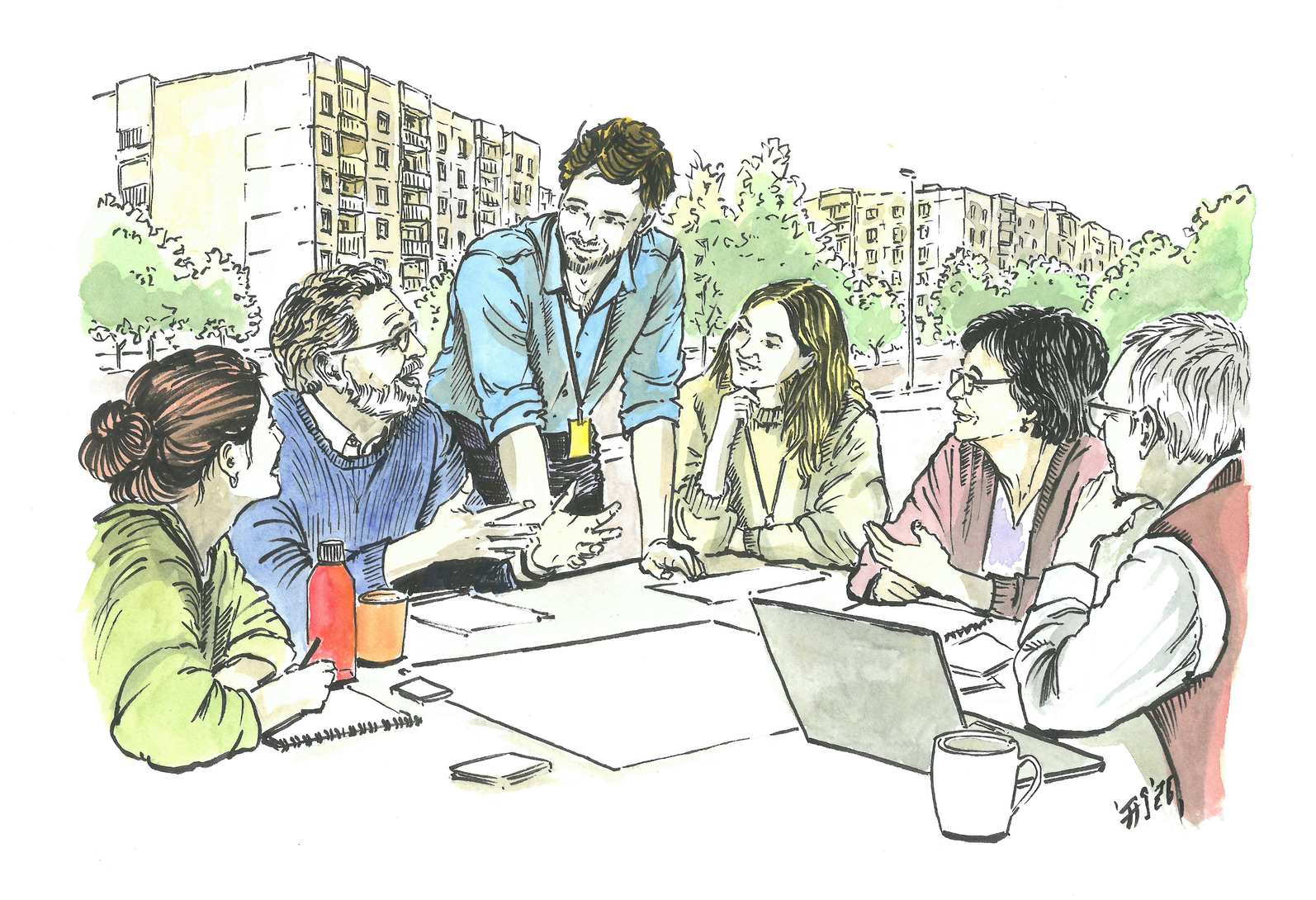
I must have organized dozens of workshops, focus groups, and other similar events in the last ten years. I’ve become proficient in writing simple, appealing invitations: straight to the point but also highlighting why the person’s contribution matters. I also know how to choose appropriate communication channels – knowing your target group really matters in this sense – whether it’s a poster in the hallway of an apartment building or a personal email or call.
But, even when you’ve done your best in every regard and you can be reasonably confident that the invitation has reached the people you intended, sometimes people just don’t want to participate. The reality is that with all these events you are in perpetual competition with people’s personal lives – you want the time that they would normally dedicate to their families, hobbies, and other pursuits – so why would they choose to attend your workshop instead? After years of experience, I can confidently say that it’s okay if they don’t choose you and it’s nothing personal. Maybe they will another time, when they have more time or the topic feels more relevant. In any case, you can’t force participation, you can simply make it as easy as possible.
In engagement processes, we always aim for the maximum amount of co-creation. We think of participation as a ladder: informing and consulting sit towards the lower end, while collaboration and empowerment represent deeper, more meaningful forms of participation. As such, we don’t simply want to inform our target groups that something is happening, we want them engaged from the start – empowered by the prospect of being able to shape the services and living environment they use.
However, there will always be details that should not and cannot be co-created. Residents can’t meaningfully decide everything: technical requirements, budgets, safety standards, procurement rules and climate targets, for example, will always be there as a rigid framework within which we operate. As a result, it is important to manage expectations from the start and clearly communicate what we can influence and change and what we cannot. It’s normal for discussion to be derailed by seemingly more pressing issues, but then it’s your job as facilitator to clearly say that “this we can’t change or control”, but we can – if possible – still convey this feedback to decision-makers.
You can plan and execute the most impressive co-creation workshop ever, but believe me when I say that trust is built in the bits that may seem utterly irrelevant or secondary: through answering emails, showing up when promised, remembering what someone said six months ago, explaining why something can’t be done and doing a thorough follow-up after the co-creation event.
It takes months if not years to build rapport with a certain group, and it can be shattered in less than a day. Always remember to focus less on the post-its during your co-creation event but more on ensuring that participants feel seen and heard by you. After all, it’s you who is the face of the initiative in that moment, not the project branding.
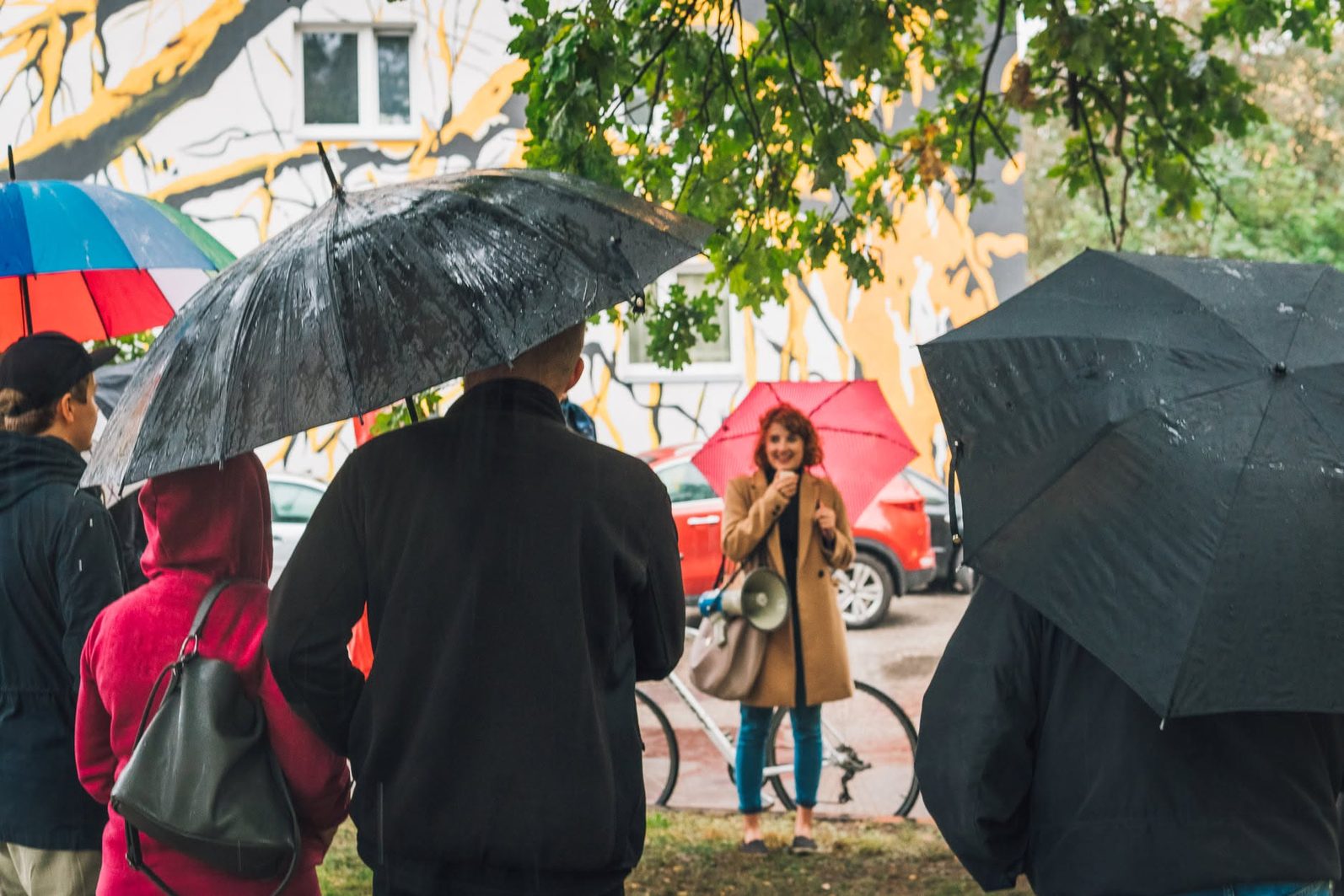
Andra, holding a red umbrella, introduces visitors to an apartment building renovated as part of the SmartEnCity project.
Last but not least, it’s important to sometimes take a step back from the co-creation process and look at it from the participant’s perspective.”. Imagine receiving an invitation to spend two hours discussing “nature-based solutions for sustainable urban regeneration” after work. Would you go? Probably not. Or being invited to “share your thoughts” with no mention of concrete follow through or what it’s even for.
It’s not about criticizing yourself or your work – I know from my own team that we can be our own harshest critics – but rather putting yourself in the shoes of your attendee. If you need them to come after work, have you made it as easy as possible for them? Are you clearly stating what’s the outcome, are you offering at least a snack if the person is forced to miss dinner, are you being mindful of how you use the short time you have with them?
Ultimately, good co-creation is not about getting as many people as possible into a room or finding the cleverest workshop method. It is about being clear about what people can influence, respecting the time and knowledge they bring, and following through afterwards. Before planning the next engagement activity, I try to ask myself one simple question: if this invitation landed in my inbox, would I actually want to come? If the answer is no, the workshop probably still needs some work.
Illustration by Ardi Sažko